Meta sold its new glasses with faces, not specs. Event teams should take notes.
Meta's 100-gram VR glasses and its Muse Charm AI gadget dominated the week. Here is what they mean for the people who run the room.
 By Jeremy Vargas··7 min read
The best marketing at Meta Connect this week was not a spec sheet. It was a montage of people putting the new glasses on and losing their composure.
"Holy mother of God." "Oh, my God. Stop." "This is like the dream." One tester called it "a quantum leap over what else you've experienced in the market." Another just asked, "How do you even think of something like this?"
Meta could have led with the numbers, and the numbers are good. Instead it led with faces. That choice is the most useful thing in the entire keynote for anyone who runs events for a living, and I will come back to it. First, what actually launched.
What Meta announced
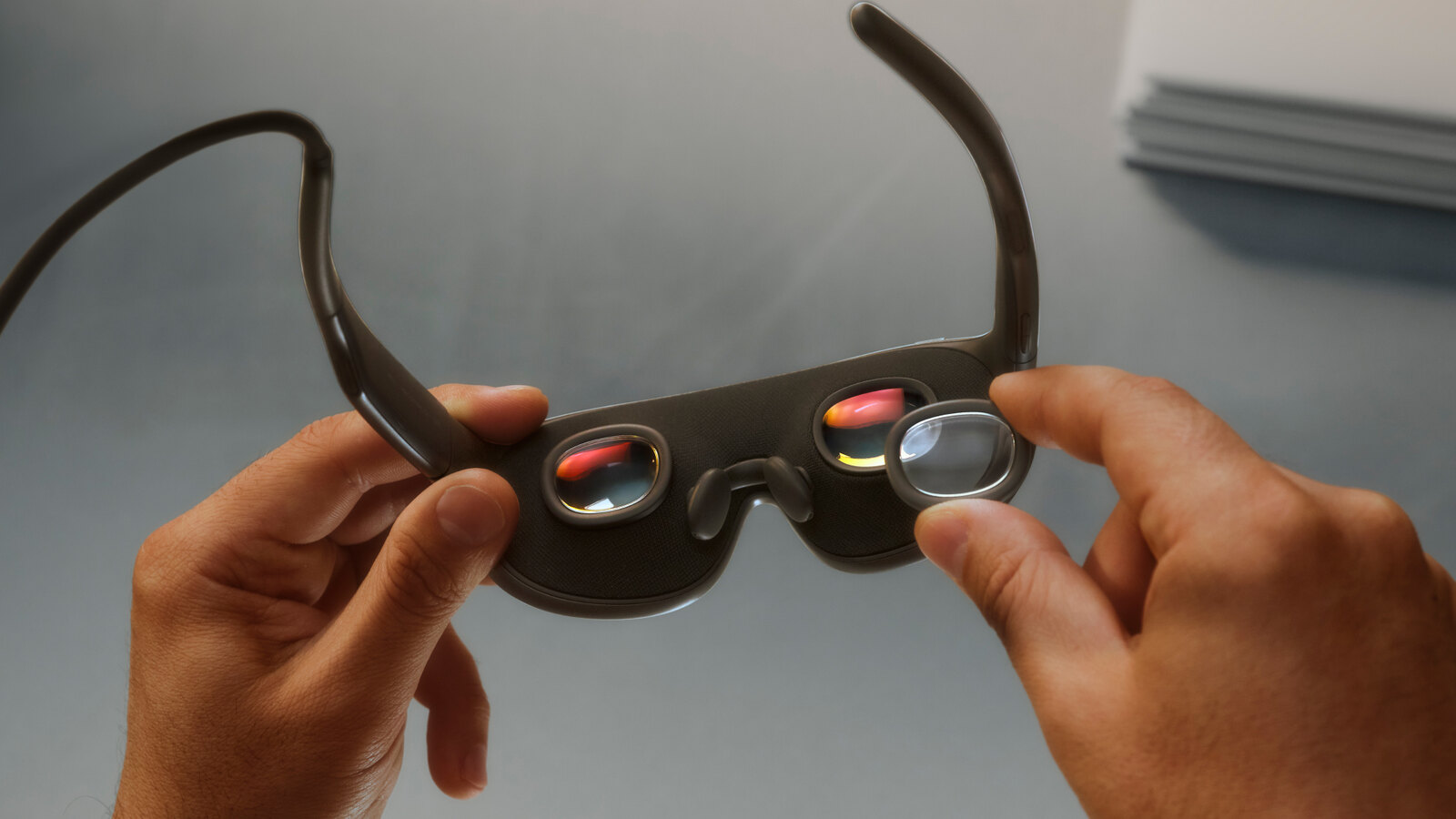
Meta VR Glasses. About 100 grams on your face, which Meta says is less than one fifth the weight of a Quest 3 and, in its words, roughly a deck of cards. The trick is what Meta calls a split architecture: the heavy parts, compute and battery, live in a separate pack, so the glasses themselves can be thin. Reported specs include a Snapdragon Reality Elite chip, a 5K display with full-color passthrough, eye and hand tracking, and up to three hours of high-resolution playback. They cost $1,299 and ship in spring 2027.
The demo reel leaned hard on two use cases. Entertainment, with sports shot so close that one viewer said you are "essentially on the mat" inside the octagon, and what Meta called "cinema anywhere." And work: the glasses support DisplayPort over USB-C, and testers talked about running two or three virtual monitors on the go.
Muse Charm. A keychain-sized device with a small display, speakers, microphones and a fingerprint sensor that lets you talk to Muse, Meta's AI agent, without a phone, computer or glasses. Mark Zuckerberg pitched it as "by far the fastest way to talk to your Muse" if you are not wearing glasses. It is due for the holidays, with no price announced, and Fortune reported that only a few working units have been built.
Muse Realtime Avatar. The quieter announcement, and the one I would watch most closely. Meta's research team published a system that turns any reference image, a photo, an illustration, a stuffed animal, into a live, talking, expressive avatar with about 870 milliseconds of latency. In Meta's own head-to-head tests, raters preferred it over Runway Characters 78% of the time and over HeyGen LiveAvatar 88% of the time. Every generated frame carries an invisible watermark, and Muse is for users 18 and over.
Worth keeping in mind: Zuckerberg also said Meta will "build fewer VR devices and only release them when we have real breakthroughs." This is a company being more selective about hardware, not less.
Lesson one: the demo is the pitch
Go back to the faces. Meta has a decade of display engineering to talk about, and the moment it chose to sell was the one where a person tries the product and reacts out loud.
Every field marketer knows this instinctively. Nobody remembers the keynote slide. They remember the thing they held, the dish they tasted, the person who walked them through it. What Meta did well was treat that moment as the centerpiece rather than a side booth, and then capture it on camera so it could travel.
The practical takeaway is not "buy VR glasses for your booth." It is: design your next event around a hands-on moment worth reacting to, and treat the reaction as the most valuable thing you collect. Who tried the product, how long they stayed, what they said. That is a far stronger signal than a badge scan, and most teams let it evaporate the second the event ends.
Lesson two: remote is getting good enough to compete
When you can watch a fight from the mat and a movie on a screen that follows you around, the argument for showing up in person gets harder to make on content alone.
That is not bad news for events. It is a sorting mechanism. If a keynote can be experienced beautifully from a couch in 2027, then the keynote was never the reason to fly in. The reason was the conversation at dinner, the introduction you did not plan, the room. Programs built around content will feel this pressure first. Programs built around people will get more valuable, because presence becomes the scarce thing.
If your event budget is mostly spent on stages and screens, this is a good year to shift some of it toward smaller rooms and better guest lists.
Lesson three: your guests are about to bring an agent
Muse Charm is a small device with a big implication. Meta is betting that people will carry an AI agent that listens, sees what they point it at, and acts on their behalf. The Muse app already connects to services like Shopify, Stripe, Instacart and GitHub, and can operate apps on a Mac.
Now picture that at your event. An attendee asks their agent to summarize the session they just sat through, find the three people in the room worth meeting, and draft follow-ups before they reach the lobby. Some of your RSVPs, reminders and even follow-up replies may eventually be handled by an agent rather than a person.
I would not rebuild anything around this yet. The Charm is barely in production and the behavior does not exist at scale. But two questions are worth asking now. Is your event information structured well enough that someone's AI can read it and act on it correctly? And when a relationship starts at your event, will you still know it started there once an agent is doing half the talking?
Lesson four: avatars will be hosts before they are guests
Realtime avatars that people prefer over the current market leaders, at under a second of latency, will show up in event tech quickly. Expect virtual concierges, multilingual hosts, always-on booth guides and personalized session recaps delivered by a character.
Some of that will be useful, especially for global audiences and after-hours questions. Some of it will be gimmick. The test I would use is simple: does the avatar free up a human to spend more time with a guest, or does it replace the human the guest came to meet? The first is leverage. The second undercuts the whole reason people show up.
What I would do this quarter
- Audit your hands-on moment. For every event on the calendar, name the one thing a guest will touch, taste or try. If you cannot, fix that before you fix the stage.
- Capture the reaction, not just the scan. Decide in advance how you will record who engaged with the demo and what they said, and get it into the CRM while it is fresh.
- Move some budget from screens to seats. Immersive remote viewing is coming for content-led formats. Invest in the formats it cannot replicate.
- Make your event machine-readable. Clean agendas, clear speaker bios, plain-language logistics. The next reader of your event page may be an agent.
- Pilot avatars where humans are not. Overnight questions, translation, wayfinding. Keep people where the relationships are.
Meta spent the week showing the internet what the next screen might look like. The part I keep thinking about is what it chose to show first: a person, in a room, reacting to something real. That is still the whole game.
Sources
- Meta, Connect 2026 keynote and VR Glasses demo video, September 23, 2026 (quotes from testers and product claims on weight and split architecture).
- Fortune, "Meta announces new lightweight virtual reality glasses to one-up Apple's Vision Pro," September 23, 2026. fortune.com
- Engadget, "Everything announced at Meta Connect 2026." engadget.com
- Quartz, "Meta unveils $1,299 VR glasses and Muse Charm at Connect 2026." qz.com
- Tom's Guide, "Meta Connect 2026 recap." tomsguide.com
- Meta AI Research, "Bringing Your Muse to Life," September 23, 2026. research.meta.ai
Newsletter
The High Signal
A weekly read on AI, events and go-to-market, from Jeremy Vargas and The Guest List. Free, every week.
Unsubscribe from any issue. Privacy policy.